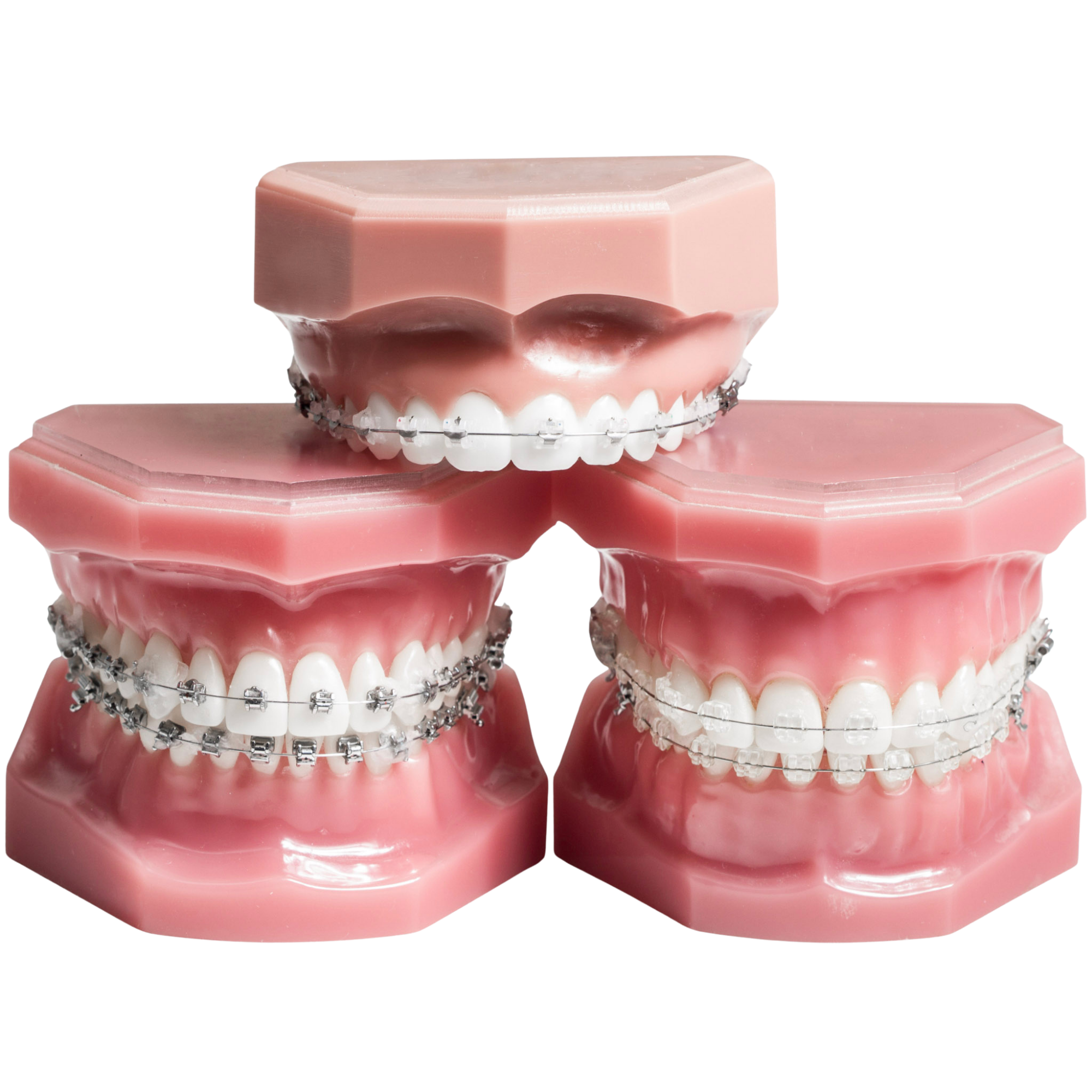
Dr. Pair and Dr. Hoang take the time to listen and help you choose the treatment that’s right for you. Whether you're looking for a traditional option or something more discreet, we offer a range of options designed for comfort, efficiency, and great results. Orthodontic treatments today are more advanced than ever. Options include metal braces, fixed and removable appliances, and Invisalign® clear aligners. Brackets and appliances can even be personalized with fun colors to suit your look, or go for a nearly invisible option. With modern materials and flexible wires, treatments are more comfortable and less noticeable than in the past. Any age is a great age to have braces!
Metal braces remain the most popular and effective way to straighten teeth, and for good reason. Dr. Pair and Dr. Hoang use high-quality metal braces to help patients of all ages get teeth that are healthy and well aligned.
Metal braces are a reliable solution for correcting a wide range of orthodontic issues, including crowding, spacing, and jaw misalignment. Made from durable stainless steel or titanium, the brackets are carefully bonded to the front of each tooth. These brackets are connected by a thin archwire, which Dr. Pair or Dr. Hoang changes and adjusts over time to gently guide your teeth into their ideal position.
With today’s advancements, metal braces are more comfortable and efficient than ever—and they remain one of the best tools for creating lasting results.
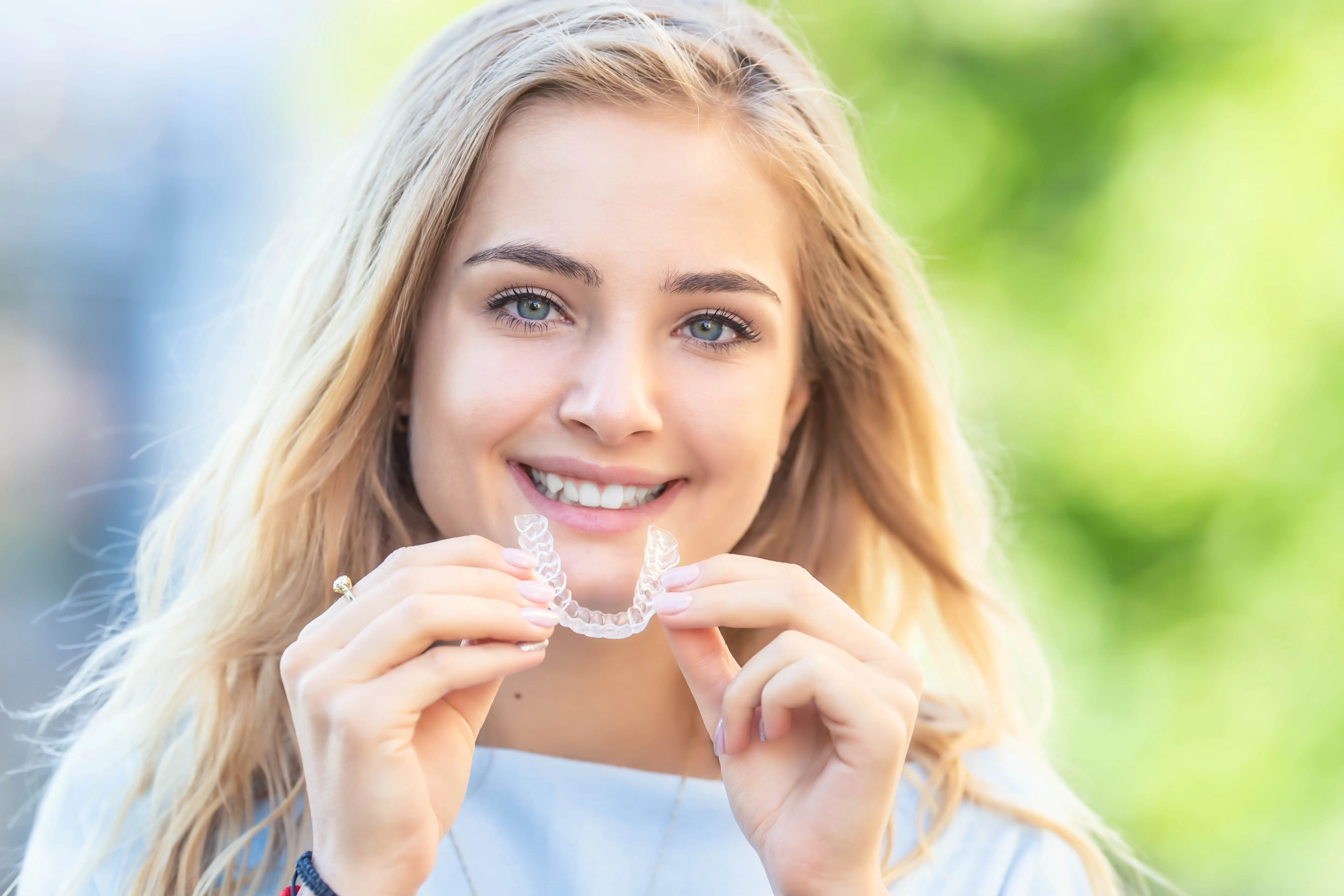
Clear aligners offer a modern, discreet alternative to traditional metal braces—perfect for patients looking for a flexible treatment option. These 3D printed trays gently shift your teeth into place without the need for brackets or wires. Because they’re clear and virtually invisible, aligners give you a bit more freedom throughout your treatment. You can also remove them while eating and drinking, so there are no food restrictions—and brushing and flossing stay simple and familiar. Clear aligners are a great option for many teens and adults with mild to moderate orthodontic needs.
learn moreYour braces are off, and your smile is straight, confident, and metal-free—congrats! But your orthodontic journey isn’t over just yet. To protect the results you’ve worked hard for, the next important step is wearing a retainer. Retainers help maintain your tooth alignment by preventing unwanted shifting. After braces, your gums, bone, and muscles need time to adapt to your teeth’s new positions. Retainers support this transition and ensure your smile stays exactly where it should be.To keep your new smile for a lifetime, you'll need to wear your retainer for as long as you want your teeth to stay straight!
Phase One orthodontic treatment, also known as early interventional treatment, is designed to help the jaw develop properly to make room for all permanent teeth and improve how the upper and lower jaws fit together. As children grow, they may show early signs of jaw alignment issues such as an upper jaw that is too narrow or developing unevenly. If a child over age six shows signs of these concerns, early orthodontic treatment can help guide proper jaw growth and reduce the need for more extensive treatment later on. Children around age eight who have crowded front teeth may also benefit from early treatment. Addressing crowding at this stage can create space for permanent teeth to come in naturally—sometimes preventing the need for extractions down the road.
A palatal expander is an orthodontic appliance used to gently widen the upper jaw, creating more space for teeth to align properly. It works by applying light pressure to the upper molars with each adjustment, gradually encouraging the jaw to expand. Dr. Pair or Dr. Hoang will guide you on when and how to adjust the expander, ensuring the process is safe and effective. Once the desired expansion is achieved, the appliance remains in place for several months to allow the bone to stabilize and prevent the jaw from shifting back. This part of treatment can make a big difference in overall alignment and help prevent the need for more extensive treatment later on.

With traditional orthodontics you get a one-size-fits-all approach. It works, but it takes more adjustments and guesswork along the way. With custom braces, your treatment is built around your anatomy and your treatment plan. It starts with a digital scan of your teeth, which Dr. Ohanian uses to select the ideal brackets and placement for each tooth.

Clear braces have all the advantages of traditional braces and are less noticeable. They are a popular choice with our teen and adult patients.
KLOwen brackets are custom-made for every tooth from a 3D digital scan. Each bracket fits the contours and angle of that tooth, which allows for more precise tooth movement with fewer adjustments.


In a rush? We offer same day braces. You can schedule a consultation at our office and leave the same day already on your way to a new smile.
For the majority of cases, the ideal age is 11 to 14, once most of the adult teeth are in and while the jaws are still growing. Some kids benefit from earlier Phase I treatment, and plenty of teens start at 15 or 16 with excellent results.
Most teen cases take 12 to 24 months. Simple crowding can be done in under a year. Bite corrections that rely on growth take longer. Wearing rubber bands as instructed is the single biggest thing a teen can do to finish on time.
For most teens, yes, if they wear the aligners 20 to 22 hours a day. For large bite corrections, braces are still more predictable. We treat a lot of teens with Invisalign and will tell you honestly which option fits your child's bite.
For the most part, yes. Hard, sticky and chewy foods (ice, popcorn kernels, caramel, whole apples) can break a bracket, so they're off the list until the braces come off. Aligners come out for meals, so there are no food restrictions.
It depends on the complexity of the treatment, so the exact answer comes after your free consultation. We offer monthly payment plans and will review your insurance benefits with you. In general, minor correction can be as low as $1900 and complete treatment ranges from $4999 to $7000 with payments as low as $150 per month.